Engaging Instruction Artifacts: Utilizing Practical Instruction and Total Participation Techniques in My Future Classroom
A linking connection for the entirety of the human population is that each person desires an active and participatory audience when speaking. This desire is the same for teachers in front of a classroom, but several instructors often forget their role as an audience for their students. Like the frustration teaching professionals feel when a class is rowdy or disconnected, students often feel the same kind of discontent when a teacher dismisses questions or participation. As instructors, teachers should be the first to act accordingly with respect and consideration for others, especially their students. When instructing my future classroom, I want to demonstrate the enthusiasm and response I desire as a teacher through my actions and engaging instruction. Through practical instructional elements and total participation techniques, I will shepherd a culture of community, engagement, positivity, and respect in my classroom.
The elements of effective instruction I will use in my future class feel obvious, but often they delve deeper into teachers’ pedagogy than one might think. The first element is a critical reflective practice which Milner et al. (2018) describe as “reflection on action endeavors in which a teacher considers his or her own actions and what was really happening during an activity with regard to issues of equity, access, and social justice.” (p. 59). Though this description focuses on how teachers can use this aspect of instruction, it is also necessary for instructors to encourage students to do the same. I want to challenge my students to question their outlooks and beliefs, hopefully, so that they can consider their repertoire of experiences through different lenses in and out of school (Milner et al., 2018). This element builds into the second, which is to push toward high engagement in the classroom. To inspire this learning, a teacher must use the first element to garner self-awareness and intrinsic debate to help limit misinterpretations. It locates the contributions to problems (teacher and student sourced), and this consciousness is beneficial to overall classroom management (Milner et al., 2018). When fewer conflicts arise in the classroom, it is easier for students to focus on the content being given to them. Students can focus, become exposed to new lesson-based insights, and provide feedback that teachers are more likely to receive through their critical reflective practice (Milner et al., 2018). These interactions give students the autonomy I will curate in my classroom, pushing for the debate and discussion students have reported they desire (Himmele & Himmele, 2017). Considering what students want and have gone through in life increases morale in the classroom as they feel heard and seen by the adults in their life.
Positive attitudes in schools start with the teaching staff, and their engagement often makes or breaks their pupils’ spirits (Himmele & Himmele, 2017). When I approach anything in life, a poor attitude is rarely beneficial and often makes it difficult to pay attention, participate, and do an assigned task. Accurate positive framing is when a “teacher uses an optimistic and enthusiastic outlook when talking about all facets of student learning, believes and communicates to students that they can and will succeed, and holds the work of teaching and learning in high regard” (Milner et al., 2018, p. 80). This outlook can infest a class as long as what is said feels authentic and unrehearsed, revealing students’ desired outcomes (Milner et al., 2018). I will demonstrate a genuine love for teaching and learning in my future career as I enter this line of work with pure intentions. Placing students above my interests within the classroom and actively wanting to contribute rather than take is something that my students will be able to see and appreciate. Students who feel supported in their school environment will demonstrate their ability to thrive, improving classroom management (Milner et al., 2018). Teachers pushing their students with a positive frame of mind and newfound motivation incidentally shepherd an environment that fosters higher-order thinking, making students care about their learning (Himmele & Himmele, 2017). Ensuring this positivity and care for learning makes for a well-structured and scholarly community.
Many employers frame their workplace as a familial one that facilitates loyalty and hard work—their reasoning is well-considered. Employers use this phrasing to implement a subconscious alliance between employees and higher-ups/the workplace. Some might call it sneaky, but I will take a page from their book regarding my future classroom. Promoting an underlying classroom community by ensuring students are aware of the importance of their roles facilitates a vital union (Milner et al., 2018). I plan on arranging my classroom in a way that encourages students to interact with one another but is also easy to move around in; students should be able to easily access all areas in the classroom as well (Milner et al., 2018). This kind of organization increases community and eliminates distractions and other aspects that take away from the learning experience. With the extermination of irrelevant factors, the community model promotes peer feedback and a growth mindset (Milner et al., 2018). The comfort between classmates helps the overall class thrive and support one another, setting goals for themselves and others in a way that pushes individuals to their educational limits and beyond.
Total participation techniques (TPTs) are another mode to engage students in a way that motivates them in the classroom and stimulates their intellectual understanding. The TPT cognitive engagement model is “aimed at helping you visualize the relationship between total participation and higher-order thinking in your classroom” (Himmele & Himmele, 2018, p. 16). I want to utilize these techniques to integrate modes of high cognition and participation so that students can effectively consider and use what is being taught (Himmele & Himmele, 2018). To implement TPTs, I plan to use many concepts and recommended techniques, such as ripple questions, on-the-spot TPTs, TPT hold-ups, and TPTs involving movement. In all of these applications of TPTs, teachers must make a conscious effort to promote student interaction and enthusiasm. In selecting the content for a class, I will use my understanding of the content my students find relevant and respond to in order to facilitate a healthy classroom (Milner et al., 2018). This makes for a well-managed class and heightens learning as these TPTs acknowledge the variety in how students learn and provide multiple means of growing their understanding (Milner et al., 2018).
Through practical instructional elements and total participation techniques, I will shepherd a culture of community, engagement, positivity, and respect in my classroom. The instructional aspects will show through my desire to know my philosophies and urgency for students to question and know theirs, a push for further engagement, a positive outlook modeled for and pulled from students, and the curation of community within the classroom. I will promote high engagement and participation through total participation techniques that excite and challenge students. In all of my implementations in the classroom, I understand that I must put in my total energy and focus to successfully pull off my intentions in a way that is fulfilling to all parties. My classroom will be the safe space every young adult needs to flourish in and out of the classroom in their learning as well as their behavioral management.
Figure 1
Figure 1 is a bingo card intended for a review exercise with a ninth-grade class. The way this would work is for me (the instructor) to stand in front of my class and read out the definitions of different vocabulary words taught during the semester. An alternative to me standing in front of my class reading out the definitions would be to walk around the class and have different students read the following definition. This artifact fosters student engagement by requiring students to make connections and draw conclusions based on their knowledge (Himmele & Himmele, 2017). The students must have a base understanding of the vocabulary terms to participate fully, and walking around requires the active engagement of every student.
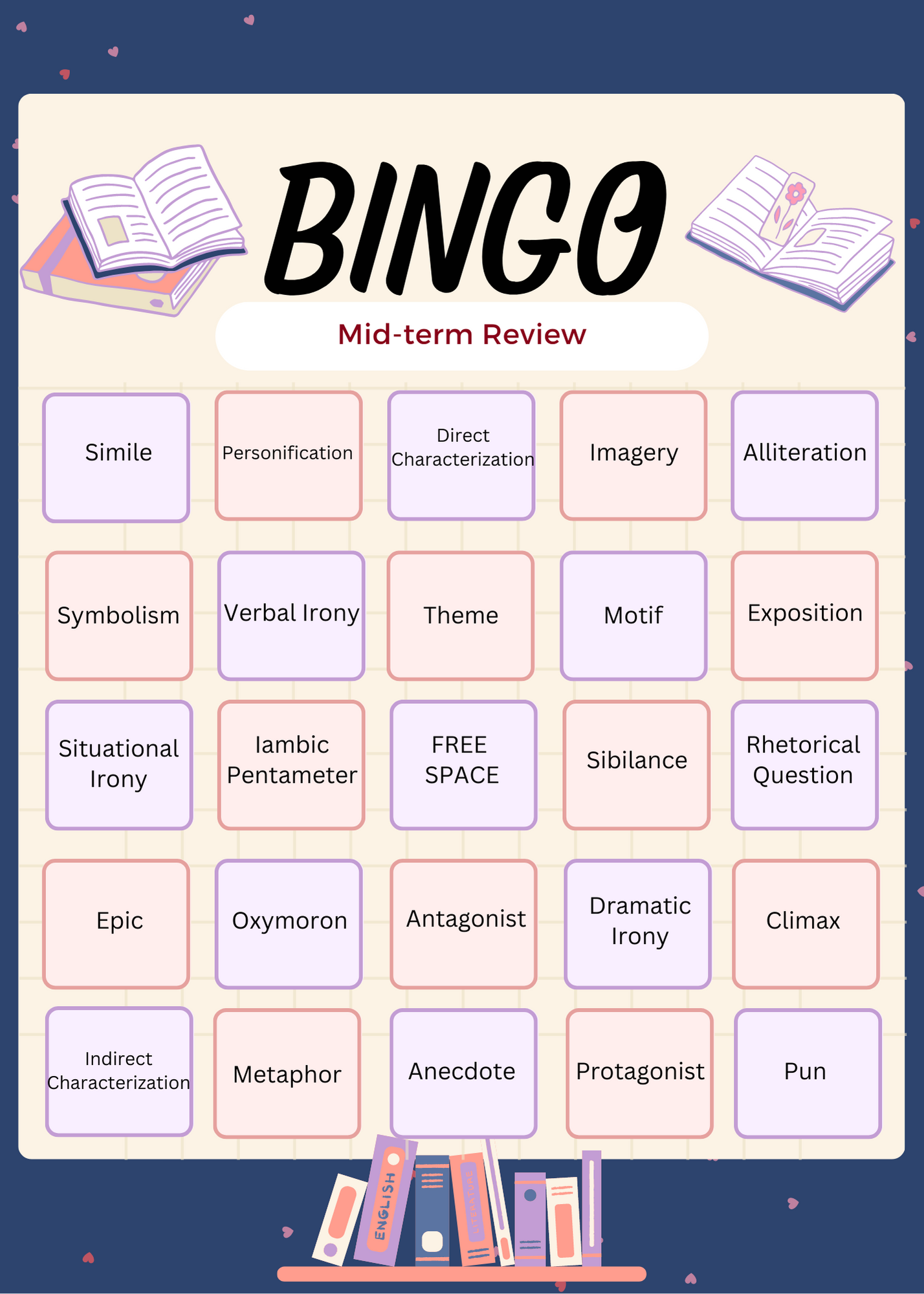
Figure 2
Figure 2 is an activity called a quick write. I learned about this short activity from Himmele & Himmele (2017). This activity fosters student engagement by allowing students to utilize content in a class and actively engage with that content for a controlled amount of time (Himmele & Himmele, 2017). Students develop comfort with engaging with the content and will fear failure less when they can express their thoughts and reactions freely. The word bank also helps lead students in the right direction to keep away from the fear of failure.
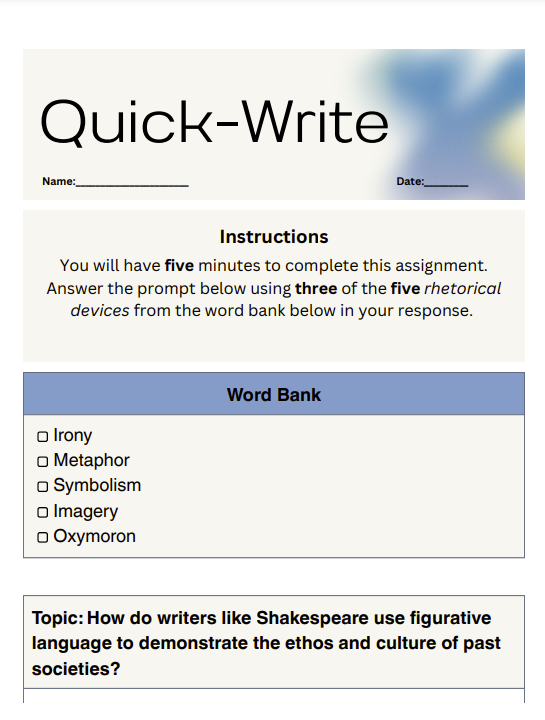
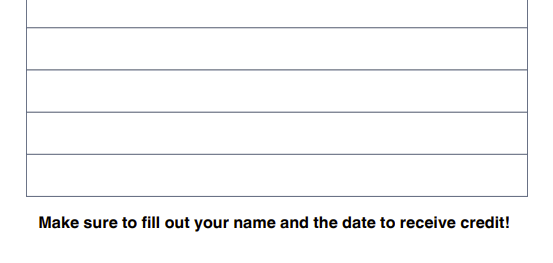
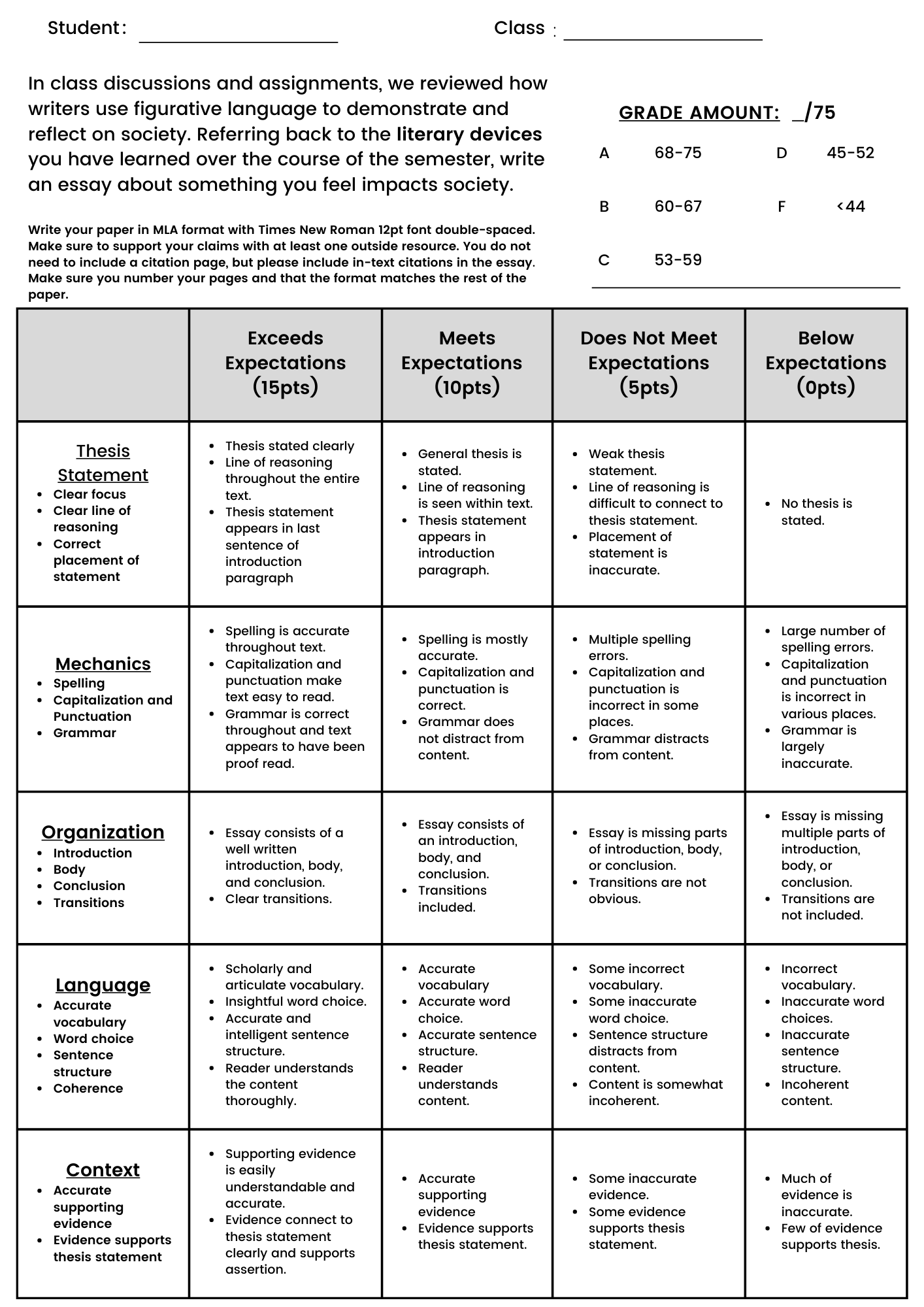
Figure 3
Figure 3 is an instructional prompt and grading rubric for students. This artifact promotes high student engagement by setting out a clear deductive list of expectations and priorities for them to sort through. This kind of list gives a sense of independence to students as you have given them the tool they need to succeed at the assignment. Once I let the students lead their experience with this kind of assignment, students I would not have previously expected to thrive will (Himmele & Himmele, 2017). Not all students thrive with verbal instruction and the expectations to complete said instructions then and there; some require the extra time and detail that goes along with a rubric and instructional prompt.
References
Himmele, P., & Himmele, W. (2017). Total participation techniques: Making every student an active learner. Association for Supervision & Curriculum Development.
Milner, H. R. I., Cunningham, H. B., & Kestenberg, E. G. (2018). These kids are out of control: Why we must reimagine classroom management for equity. Corwin Press.