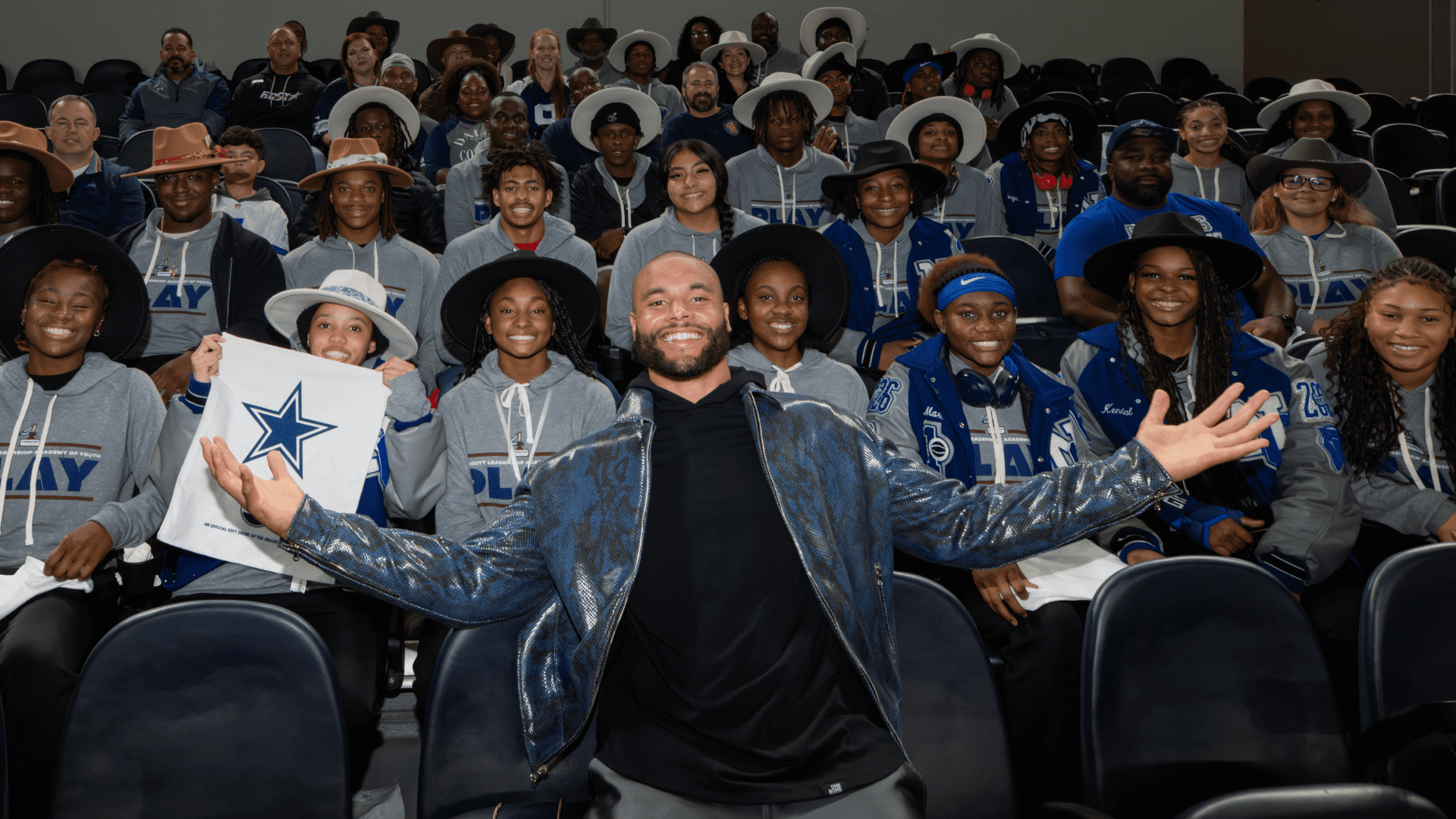
They say everything is bigger in Texas, and for Dak Prescott, that might include the pressure. As the quarterback of the Dallas Cowboys, every throw, every decision, and every game is watched and judged on one of the biggest stages in sports. In Dallas, football is not just a game it is an identity. To fans, Prescott represents leadership, toughness, and consistency. But behind that image was a personal struggle that had nothing to do with coverages, blitzes, or playbooks.
Prescott’s journey has not just been about football success or statistics. In 2020, his life took a major emotional turn when he experienced the loss of his brother, Jace Prescott. That moment came on top of earlier family tragedy, including the death of his mother, Peggy Prescott, who passed away from colon cancer in 2013. These losses shaped him in ways that extended far beyond football.
In reflecting on his emotional state during those years, Prescott openly admitted, “I started experiencing depression… I didn’t know necessarily what I was going through.” That honesty stood out in a professional sports world where athletes are often expected to stay silent about mental health struggles. Instead of hiding it, Prescott chose to speak publicly about what he was dealing with.
That decision changed how many people viewed him. Rather than only seeing a star quarterback, fans and fellow athletes began to see someone willing to confront something deeply personal. His openness helped shift the conversation around mental health in sports, especially in the NFL, where toughness is often valued above vulnerability. Prescott showed that even the strongest-looking athletes can be dealing with internal battles that are not visible on game day.
His willingness to speak up also encouraged broader discussions about mental health awareness. In interviews and public appearances, he emphasized that people should not go through struggles alone. One clip that stood out to me was from “Stephen A. Smith’s talk show segment”, where he reacted to Dak Prescott speaking openly about seeking help for his mental health. Although Stephen A. Smith is often known as a critic of Dak Prescott, he shared a personal response, saying, “When I read Dak Prescott’s words, I can relate. I lost the greatest woman I’ve ever known, my mother, on June 1st, 2017… for two years, every single day at some moment in time, I wished I was dead.” His message focused on community, support, and honesty. In one reflection shared during media coverage of his story, he stressed the importance of connection, explaining that people should not isolate themselves during difficult times. The impact of his words reached far beyond football. Fans, mental health advocates, and even other athletes began referencing his story as an example of breaking stigma. In a sport built around toughness and performance, Prescott introduced a different kind of strength, emotional openness.
Out of these experiences, Prescott helped grow the Faith Fight Finish Foundation, an organization dedicated to supporting individuals facing adversity, including mental health challenges and life hardship. The foundation was inspired by his personal losses, including the passing of both his mother and brother. Instead of allowing grief to isolate him, Prescott used it as motivation to help others who may be dealing with similar pain. The foundation focuses on mental health awareness, cancer research, and suicide prevention. It also encourages people to keep pushing forward through difficult circumstances, even when life feels overwhelming. By tying his personal experiences to a larger mission, Prescott turned tragedy into purpose.
Prescott’s influence is not limited to what happens off the field. As the leader of the Cowboys, he continues to carry the weight of one of the most high-pressure positions in professional sports. Every season brings expectations of playoff success and championship contention. Yet even while managing that pressure, he has remained consistent in speaking about mental health and emotional well-being.
His story has also resonated with people outside of sports entirely. Many individuals who have never watched an NFL game have connected with his honesty because it reflects a universal struggle with grief, pressure, and emotional endurance. His message has helped normalize conversations that were once avoided, especially among young men and athletes who are often told to “tough it out.”
In 2023, Dak Prescott’s impact off the field was officially recognized when he was named the Walter Payton NFL Man of the Year, one of the league’s most prestigious honors. The award highlights players who excel not only on the field but also for their charitable work and community impact. Prescott was recognized largely because of his leadership through the Faith Fight Finish Foundation. This award showed that his influence goes far beyond football, proving that his commitment to helping others is just as important as his performance on the field.
Dak Prescott will always be known as an elite quarterback in the NFL. But his legacy is expanding into something larger than football statistics or wins and losses. Through his openness, advocacy, and foundation work, he has become a voice for mental health awareness in professional sports. In a place where everything is bigger, including expectations and pressure, Prescott has shown that true strength is not about hiding struggle it is about facing it openly and helping others do the same.